
Key Benefits of Wind Shielding for Personnel Bridges
- Up to 75% reduction in wind speed for safer, more comfortable transit
- Protection from rain, snow, and airborne debris
- Improved operability during adverse weather
- Lightweight and quick to install
- Resilient to high wind speeds (up to 120mph)
- Durable construction with stainless steel or coated fabric

The Importance of Wind Shielding in Offshore Environments
Offshore platforms face some of the most extreme weather conditions in industrial operations. Personnel bridges, also known as link bridges or walkways, are vital for safe transit between platform modules, FPSOs, or jack-up rigs. Yet, these exposed structures are highly vulnerable to wind loading, creating hazards ranging from personnel fatigue to structural stress.
Wind shielding is an essential safety measure, designed to reduce wind exposure and increase the safety, efficiency, and well-being of offshore crews.

How Wind Shielding Improves Safety and Performance
Reducing Wind Speeds and Buffeting
High wind speeds on offshore bridges can cause:
- Dangerous slips or trips
- Difficulty carrying tools or equipment
- Risk of wind-lifted clothing impairing vision or balance
Locker’s wind shields—including the Extra Span Shield, Mini Shield, Corrugated Shield and Galebreaker Fabric Wind Shields—use mesh or fabric barriers to deflect airflow, reducing wind speed by up to 75%.
Protection Against Weather and Debris
Shielding also:
- Limits snow and rain build-up on walkways
- Reduces maintenance due to less corrosion from salt spray
- Protects against flying debris during storms
Mini and Fabric Wind-shielding Samples During Testing at 101 mph
Wind Shielding Options from Locker Heatshielding
Rigid Wind Shielding – Stainless Steel Mesh Systems
Extra Span Shields
The Extra Span type windshielding is used as a permanent solution for protection of both personnel and equipment from the harsh weather conditions experienced both onshore and offshore in the oil and gas industry.
Key Features
- Wind efficiency 62% (72% with additional layer)
- Independently tested at wind speeds in excess of 100mph (87knots/h)
- Able to span large distances between supporting steelwork
- All stainless steel type 316L construction
- Ideal for permanent wind and weather protection
- Excellent light transmission and ventilation
Check out our Montrose Stair Tower Project to see Extra Span Wind-Shields providing wind protection of personnel using bridges and stair towers on this platform in the North Sea.

Extra Span Wind-Shielding
Corrugated Shields
Corrugated wind-shielding panels have a single layer mesh construction which can reduce the wind speed by over 75%
- Wind speed reduction of 75%
- Load tested to represent wind speeds in excess of 140mph
- Able to span large distances between supporting steelwork
- All Stainless Steel type 316L construction
- Ideal for permanent wind and weather protection
- Excellent light transmission and ventilation

Corrugated Wind-Shielding
Mini Shields
Mini type wind-shielding panels are single layer construction. They are typically used for small panels and complex shapes.
Key Features
- Complex and intricate designs can be accommodated easily
- All stainless steel type 316L construction
- Ideal for permanent wind and weather protection
- Excellent light transmission and ventilation
- Quick onsite installation and removal
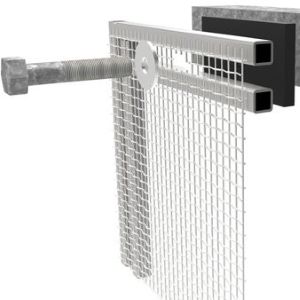
Mini Wind-shielding Panels
Fabric Shields
Galebreaker Industrial Fabric Wind-Shielding
Fabric wind-shielding is custom designed and manufactured in the UK. Panels are able to span lengths of up to 9.1 metres, although an additional skirting feature means panels can be overlapped to form a complete protective wall with no limit for overall width.
Key Features
- Wind, rain and dirt resistant
- Excellent UV resistance
- Proven efficiency: can reduce wind speed by up to 75%
- Fire resistant classification B-s2,d0 to EN 13501-1
- Lightweight, strong and very durable: 1.25 kg/m2 total weight including fixings
- Approx. 380 g/m2 weight of material
- Temperature range -30 °C to +70 °C.
- Withstands wind speeds: standard 90 mph, maximum 120 mph (53 m/s)
- Shields can be rolled into bales for easy handling, shipping and storage

Fabric Wind-shielding
Summary: Why Wind Shielding Matters for Offshore Walkways
In challenging offshore environments, wind shielding is not just a comfort upgrade—it’s a critical safety measure that ensures personnel can move freely and safely between platforms. Locker Heatshielding offers both rigid and fabric shielding systems tailored to your operational needs.
FAQ: Wind Shielding for Offshore Personnel Bridges
Q1: How much wind speed reduction can I expect?
A: Locker’s wind shielding can reduce wind speed by up to 75%, depending on the installation and product selected.
Q2: Will shielding affect light transmission or ventilation?
A: No. The mesh and fabric designs are engineered for excellent light transmission and airflow, maintaining a comfortable working environment.
Q3: Can wind shields be retrofitted to existing walkways?
A: Yes, both rigid and fabric systems are modular and can be retrofitted without significant structural changes.
Q4: What materials are used?
A: Shields are built using 316L stainless steel or UV-resistant polyester fabrics with marine-grade fasteners.
Q5: Are these systems compliant with offshore safety standards?
A: All Locker wind shielding systems are tested for thermal and wind loading, meeting rigorous offshore safety requirements.